
Last updated November 21, 2026
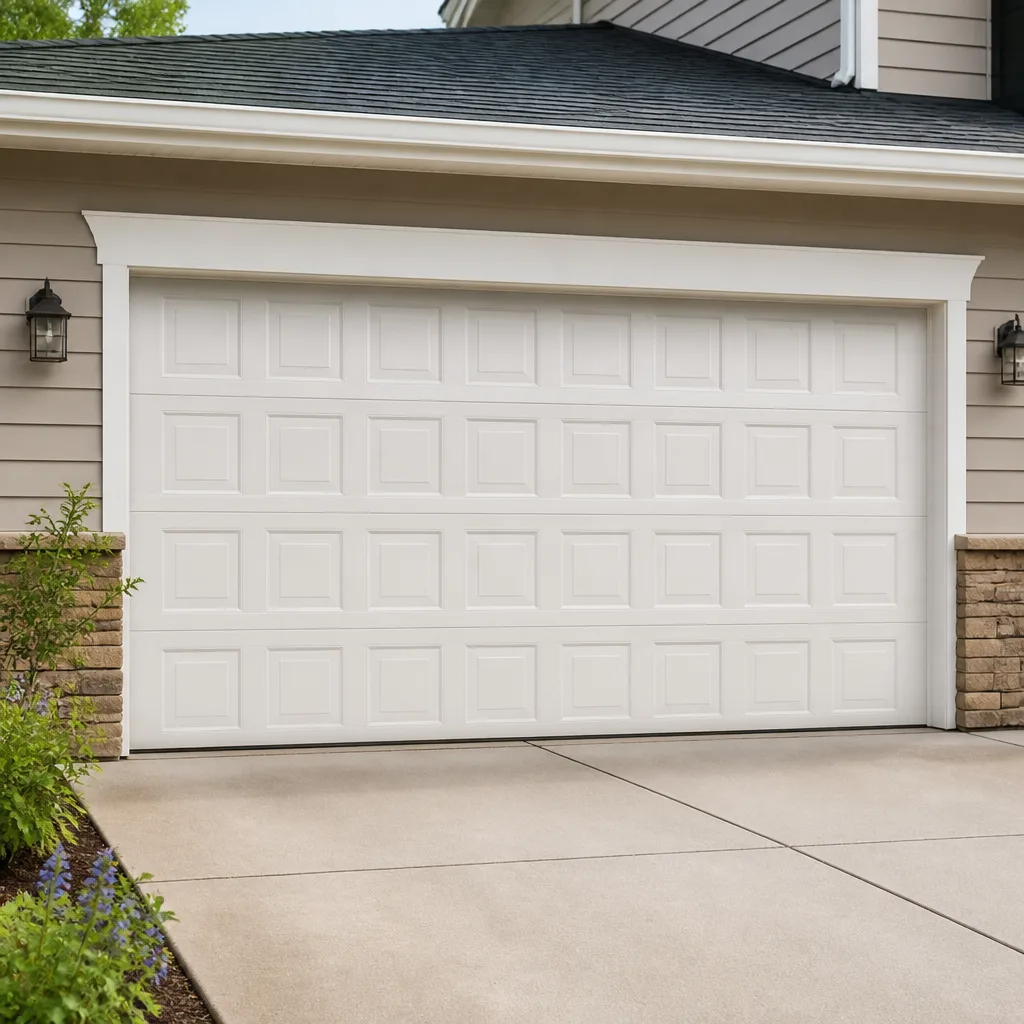 Raised-panel steel
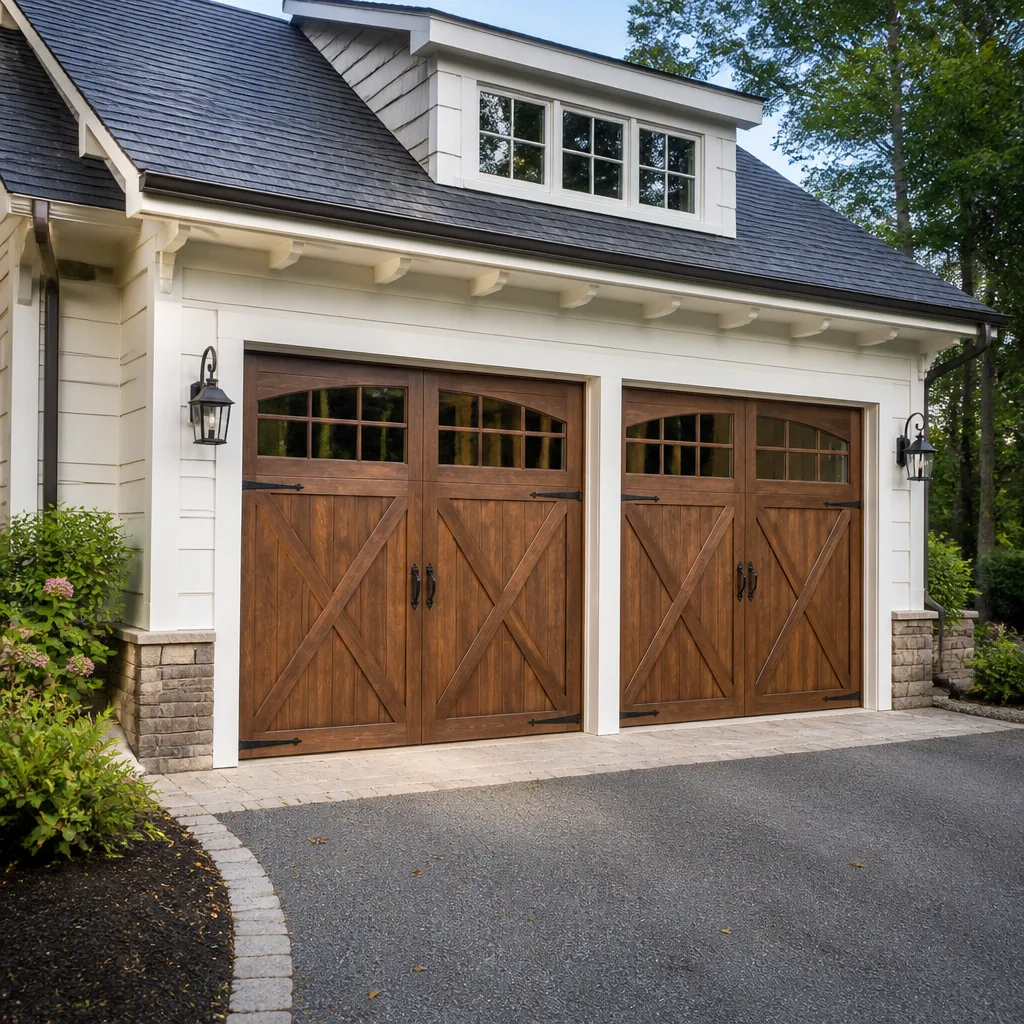 Carriage house
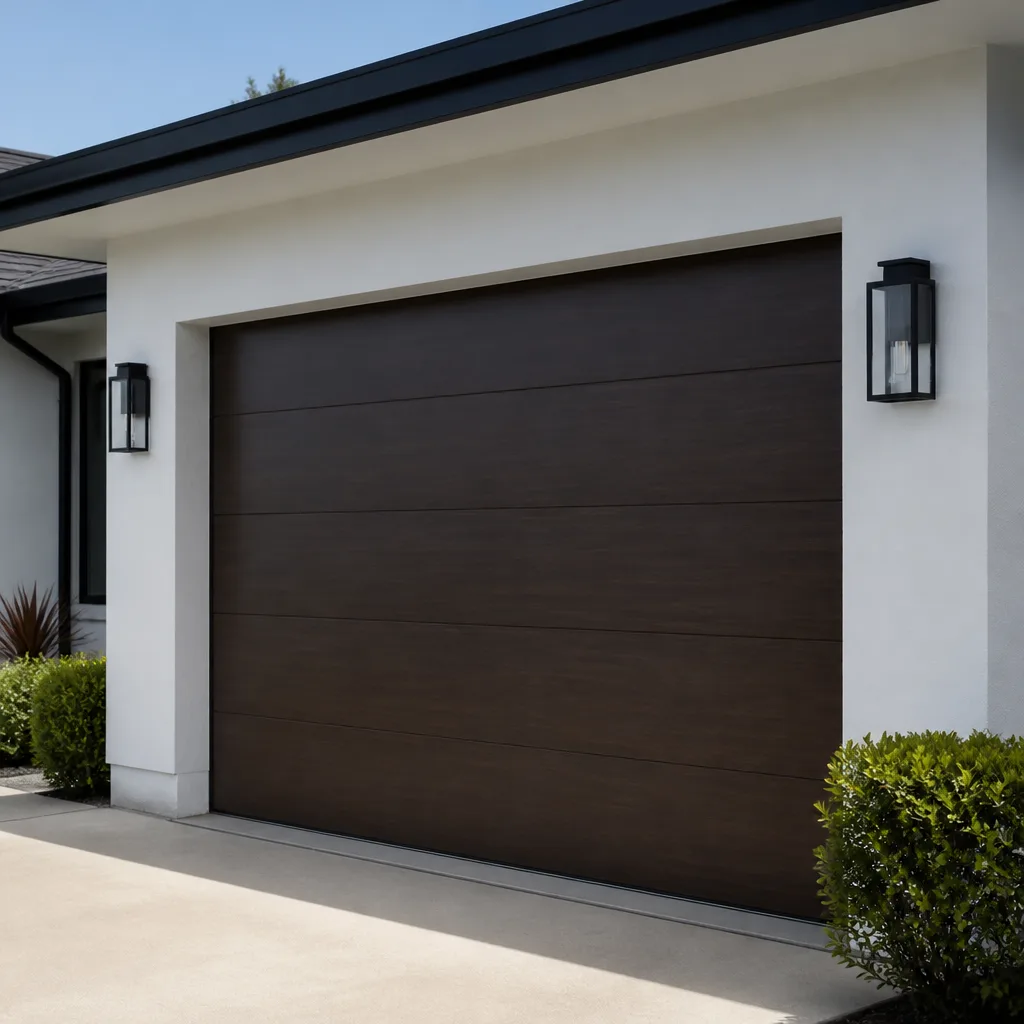 Modern flush
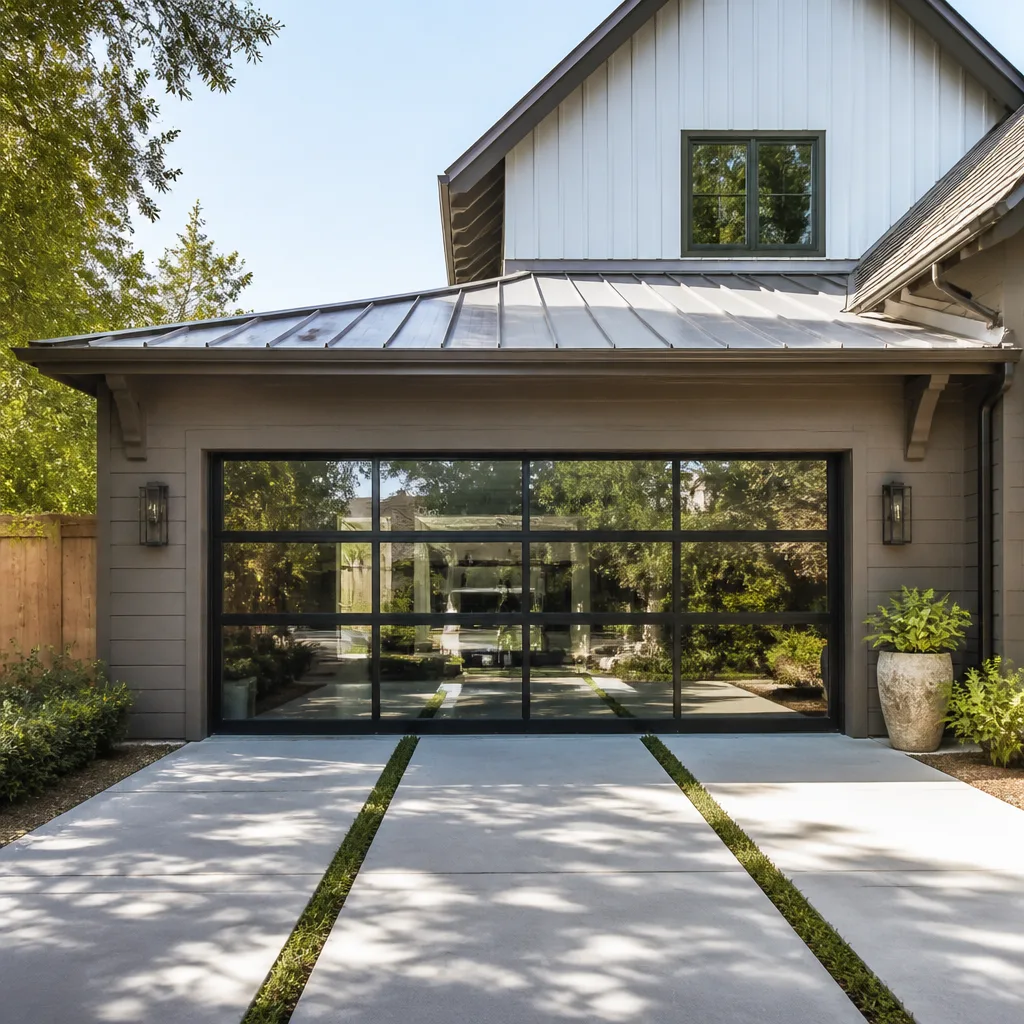 Full-view glass
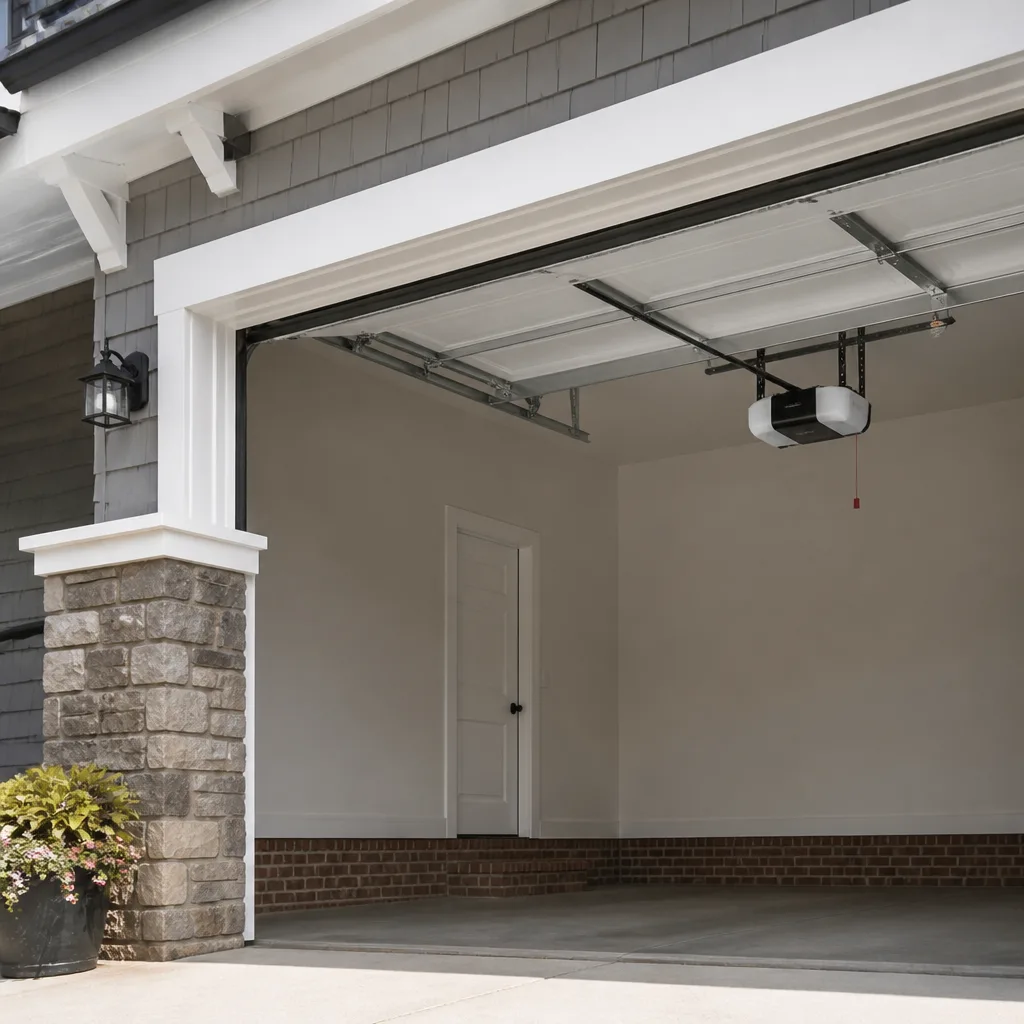 LiftMaster openers
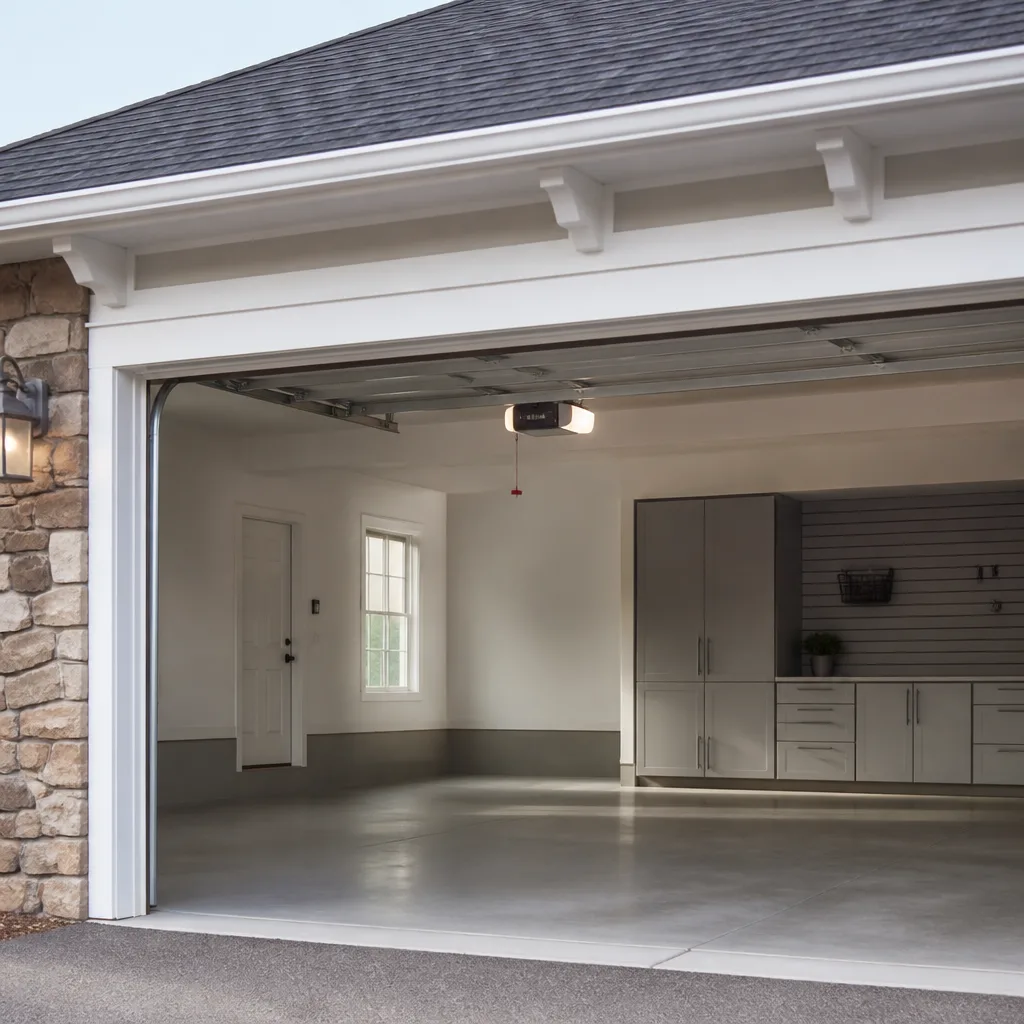 Chamberlain openers
Full 25-point door and opener safety check with every visit - springs, cables, rollers, tracks, and your LiftMaster or Chamberlain opener included
You get a price before we start. It does not change when the pro arrives.
Get your free estimateThe Complete Guide to Garage Doors in Springfield
Most homes in Springfield were standing long before 1993. That’s the year UL 325 made auto-reverse and photo-eye safety systems standard on every garage door opener sold in the US, and a large share of the openers still running in this city were installed before that rule took effect. Homeowners who assume the door will bounce back off a child, a bicycle, or a trash can are sometimes trusting a mechanism that was never built to do it. This guide is about the Springfield driveway specifically: how our freeze-thaw cycles work on torsion springs, how the region’s humidity and road salt treat steel and wood doors, what the housing stock means for inherited hardware, and how to spot trouble in a listing or inspection report before you sign.
Quick Answer
A garage door in Springfield needs three things to stay safe and reliable: springs sized and serviced for a climate with wide temperature swings, weather seals that survive freezing and thawing, and a safety reverse system that actually works. The door itself (steel, wood composite, or fiberglass) matters less than the hardware and balancing underneath it. If your door was installed before 1993, check the auto-reverse first; that single test tells you more about safety than anything else on the door.
Styles & brands we work with
- Raised-panel steel
- Carriage house
- Modern flush
- Full-view glass
- LiftMaster openers
- Chamberlain openers
Table of Contents
- How Springfield’s Freeze-Thaw Cycles Stress Your Garage Door
- Steel vs. Wood Composite vs. Fiberglass: What Holds Up Here
- What Springfield’s Housing Stock Means for Your Hardware
- The Safety Checklist Every Springfield Homeowner Should Run
- Why Springs Are the Part That Fails First in Springfield
- Choosing and Maintaining an Opener: LiftMaster, Craftsman, and Raynor
- Brand Availability and Service Coverage in Hampden County
- Reading a Springfield Listing or Inspection Report for Door Red Flags
How Springfield’s Freeze-Thaw Cycles Stress Your Garage Door
Springfield sits in a climate with real winters and genuinely humid summers, and it’s that swing, not the cold alone, that wears garage doors out. Every time the temperature drops below freezing and climbs back above it, moisture in the air and in the ground around the foundation changes state. Parts that expand in the cold and contract in the heat are asked to do that dozens of times a season. A torsion spring under constant tension is cycling through those temperature changes right along with the door, and metal fatigues with each one.
The bottom seal takes a different kind of beating. It’s the rubber or vinyl strip along the base of the door that keeps water, cold air, and pests out. In Springfield, that seal freezes to the concrete apron on a cold morning and gets torn loose when the opener lifts the door. A seal that’s cracked or half-attached lets meltwater wick up into the bottom panel, where it rusts steel from the inside out. If you notice daylight under the door or water on the floor after a storm, the seal is doing less than it should.
What this means in practice for a Springfield garage:
- Springs see more stress cycles per year than in a milder climate, so their service life is measured more by temperature swings than by the calendar.
- Bottom seals should be checked each fall, before the first hard freeze, and replaced if they’re stiff or torn.
- Steel panels near the floor are the first to rust, usually where the seal has failed and salt-laden slush has sat against the metal.
- Tracks can warp slightly when the door frame shifts with the frost heave in the ground, which throws the door out of alignment.
Steel vs. Wood Composite vs. Fiberglass: What Holds Up Here
Door material matters in Springfield in ways a generic national guide won’t tell you. The city’s humidity swings from dry winter air to sticky summer days, and near I-91 the road salt thrown up in winter coats everything within a few feet of the pavement. Combined with the freeze-thaw cycle at the base, that’s a hard test for any door. Here’s how each construction type generally holds up.
Steel
Steel is the most common door material in Springfield and for good reason. It’s strong, relatively low-maintenance, and won’t warp or rot in humidity. The weak point is the paint and finish: once the coating chips, rust takes hold. A steel door near I-91 or a busy street will want its bottom panel cleaned and the joints sealed periodically, because that’s where salt and grit collect. With intact paint and a good bottom seal, a steel door is a solid choice for most homes here.
Wood composite
Wood composite gives the look of a wood door with less of the upkeep. It resists moisture better than solid wood, but it’s not immune to it. In a climate with Springfield’s humidity, the places to watch are the bottom edges and any joints where water can sit. Wood composite doors benefit from a fresh coat of paint or stain every few years, and they need the seal at the base to stay intact. For homeowners who want a carriage-house look and are willing to keep up the finish, it’s a workable option.
Fiberglass
Fiberglass resists rust and rot well, which suits the humidity swings here, but some fiberglass doors can crack in severe cold or fade over time in direct sun. For a south-facing door that gets full afternoon sun, fading is worth considering. Fiberglass is lightweight and takes pressure off the opener, but as with any material, the quality of the door’s internal structure and hardware determines how long it lasts.
What Springfield’s Housing Stock Means for Your Hardware
Springfield has a lot of housing from the early and mid-twentieth century, and that age profile matters when you move into a home or inherit a garage door you didn’t choose. Many of those openers predate the UL 325 safety standard, and some may have no working auto-reverse at all. That’s not a small thing. A door without a functioning reverse system can trap or injure a person or a pet, and it’s the most common safety gap we see in older Springfield homes.
Older hardware also tends to be mismatched. A homeowner adds a new opener but keeps the original springs, or replaces a panel on a door whose balance was already off. The result is a door that works for a while and then starts binding, sagging, or refusing to close all the way. When you buy a house with an older garage, the practical move is to have the whole system looked at as a unit rather than guessing at individual parts.
For a Springfield homeowner taking on an older home, the priority list usually looks like this:
- Test the auto-reverse and photo-eye (details in the safety section below).
- Have the springs and balance checked, since these are what hold the door’s weight.
- Inspect the bottom seal and the bottom panel for rust or water damage.
- Check the openers’ age and brand, and whether replacement parts are still available for it.
- Look at the tracks and hinges for wear, rust, or misalignment.
Each of those points is something a trained eye can check in a short visit, and catching a worn part early is cheaper and safer than waiting for it to fail. If any of it needs attention, that’s exactly the kind of work a specialist handles.
The Safety Checklist Every Springfield Homeowner Should Run
Testing a garage door’s safety systems takes a couple of minutes and doesn’t require tools. Every homeowner should know how to run it, and should run it at least twice a year. If the door fails any of these checks, stop using the opener until it’s serviced.
- Test the auto-reverse with a solid object. Place a roll of paper towels or a piece of wood flat on the floor in the door’s path and close the door with the opener. The door should reverse as soon as it touches the object. If it keeps going, the opener is not safe.
- Test the photo-eye. With the door open, wave an object between the two sensors mounted near the floor on either side of the opening. If the door is closing and the beam is broken, it should reverse. If the sensors are misaligned or their indicator lights are off, the system isn’t working.
- Check the balance. With the door closed, pull the manual release cord to disconnect the opener, then lift the door about halfway and let go. A properly balanced door will stay roughly where you put it. If it slams down or won’t stay up, the springs or cables need attention.
- Look at the cables and springs. Broken or frayed cables and springs are a call for a professional. Don’t touch them; the tension in those parts can cause serious injury.
That last point is the one we repeat most often. Garage door springs and cables are under high tension, and adjusting or replacing them without proper training and tools is genuinely dangerous. It’s the repair most worth handing to a trained professional.
Why Springs Are the Part That Fails First in Springfield
If a garage door is going to fail at something, it’s usually the springs. They carry the entire weight of the door and are under constant tension, and in Springfield they’re working against a climate that cycles them through temperature swings all year. The two main types are torsion springs (mounted on a shaft above the door) and extension springs (running along the tracks on either side). Torsion springs are more common on modern doors and generally last longer, but they’re also the ones installed on an overhead bar under considerable tension.
When a spring breaks, you usually know it. There’s a loud bang from the garage, and the door won’t open or will feel strange and heavy. Don’t try to force it. The opener isn’t built to lift a door without balanced springs, and forcing it can damage the opener or cause the door to come down hard.
Spring repair is a job for someone who does it regularly. Measuring the old spring, matching wire gauge and length, and setting the correct tension requires specific tools and know-how. Getting the tension wrong is not just an annoyance; it can make the door dangerous to operate. This is why garage door spring repair is a specialty in its own right, and not something to hand to whoever happens to be available. When a spring goes, the right question isn’t “who’s cheapest,” it’s “who has done this before.”
Choosing and Maintaining an Opener: LiftMaster, Craftsman, and Raynor
An opener is the part most homeowners replace when they want the door to be quieter, faster, or connected to their phone. In Springfield, brand fluency matters because a technician who knows your opener’s specific logic can usually diagnose a problem faster than someone working from a generic manual. We work on the brands that dominate most local driveways, including LiftMaster, Craftsman, and Raynor, and that familiarity shortens the hunt for the cause of a door that won’t respond.
If you’re choosing a new opener, the decision comes down to a few practical questions:
- How much door are you lifting? Heavier doors need an opener rated for the weight. A cheap opener on a heavy wood door will strain and fail early.
- Do you want a belt or a chain drive? Belt drives run quieter, which matters if there’s a bedroom above the garage. Chain drives are generally more durable and less expensive.
- How much smart-home control do you need? Many current openers support Wi-Fi and app control. That’s a feature worth weighing against your habits.
- Is the old opener’s brand still serviced locally? Some older openers are harder to find parts for, and it may be more practical to replace than repair.
Maintenance is mostly about keeping the moving parts clean and the safety reverse working. A couple of drops of lubricant on the rollers and hinges, a check of the tracks, and a bi-annual safety test cover most of it. If the opener is making grinding noises, running erratically, or the light won’t stop flashing, those are signs it needs a look. A garage door opener repair call is usually straightforward when the right technician knows the brand.
Brand Availability and Service Coverage in Hampden County
Nationally, brand rankings don’t tell you much about what’s actually serviceable on a driveway in Springfield or elsewhere in Hampden County. What matters locally is whether a technician knows the specific mechanisms in the door and opener already installed, and whether parts are available without a long wait. That’s the real practical test of brand support.
The brands we’re factory-familiar with, including LiftMaster, Craftsman, Wayne Dalton, and Raynor, cover a large share of what’s on Springfield homes. That matters for a few reasons:
- Spring sizing and tension are brand- and door-specific, and knowing the system makes the repair quicker and more accurate.
- Opener diagnostics differ by brand; the same symptom can have different causes depending on the make.
- Parts availability is better for common brands, so a repair that might otherwise wait on an order can often move ahead.
If you have an older door from a brand no longer widely serviced, the practical answer may be a full replacement, and a specialist can tell you which route makes more sense for your situation. For the full picture of what repair and replacement work looks like, see our garage door repair overview. The goal is to work on the door you already have, with the right parts, rather than push a replacement you don’t need.
Reading a Springfield Listing or Inspection Report for Door Red Flags
If you’re buying a home in Springfield, the garage door rarely gets the attention it deserves in a listing. It’s often treated as a line item, not a system, and that’s where older hardware problems hide. A home inspection report may note that the door is “functional” without testing the auto-reverse, and a listing photo of a closed door tells you almost nothing. Here’s how to read between the lines.
Red flags to look for:
- Language like “age unknown” or no mention of the opener at all. That usually means an older unit that has never been serviced.
- Photos of a door not fully closed or not fully open. A door that stops short may have a balance or spring problem.
- Visible rust along the bottom panel or a torn seal. That’s water intrusion, and the damage may extend into the panel structure.
- No mention of safety reverse or photo-eye in the inspection. Ask for the system to be tested before closing, or budget for a service visit.
- A single door on a multi-car garage with no mention of the second. Each door is its own system and should be checked separately.
The practical step is to have the door and opener inspected by a garage door specialist as part of your due diligence, separate from the general inspection. It’s a small cost that can uncover a spring replacement or opener failure before it becomes your problem. That’s one of the services we offer to buyers in Springfield.
Common Mistakes to Avoid
- Forcing a door with a broken spring. Running the opener on a door whose spring has failed puts the entire weight of the door on the opener and can cause it to fail or the door to come down hard. Leave it and call a professional.
- Skipping the safety reverse test. Many Springfield homeowners have never tested their opener’s auto-reverse. It takes a minute and it’s the most important safety check you can run.
- Ignoring a torn bottom seal. In a climate with freeze-thaw cycles, a compromised seal lets meltwater and salt into the bottom panel, where rust starts quietly. Check it each fall before the first freeze.
- Replacing an opener without checking the springs. A new opener on worn or unbalanced springs will strain and may fail early. Get the door’s balance checked before assuming the opener is the problem.
- Choosing a door by material alone. In Springfield’s humidity and salt exposure near I-91, the finish and the hardware underneath matter as much as whether the door is steel, wood composite, or fiberglass.
- Handing spring work to a generalist. Springs are a high-tension repair that benefits from a technician who does it regularly. It’s not the job for a general handyman.
See the difference
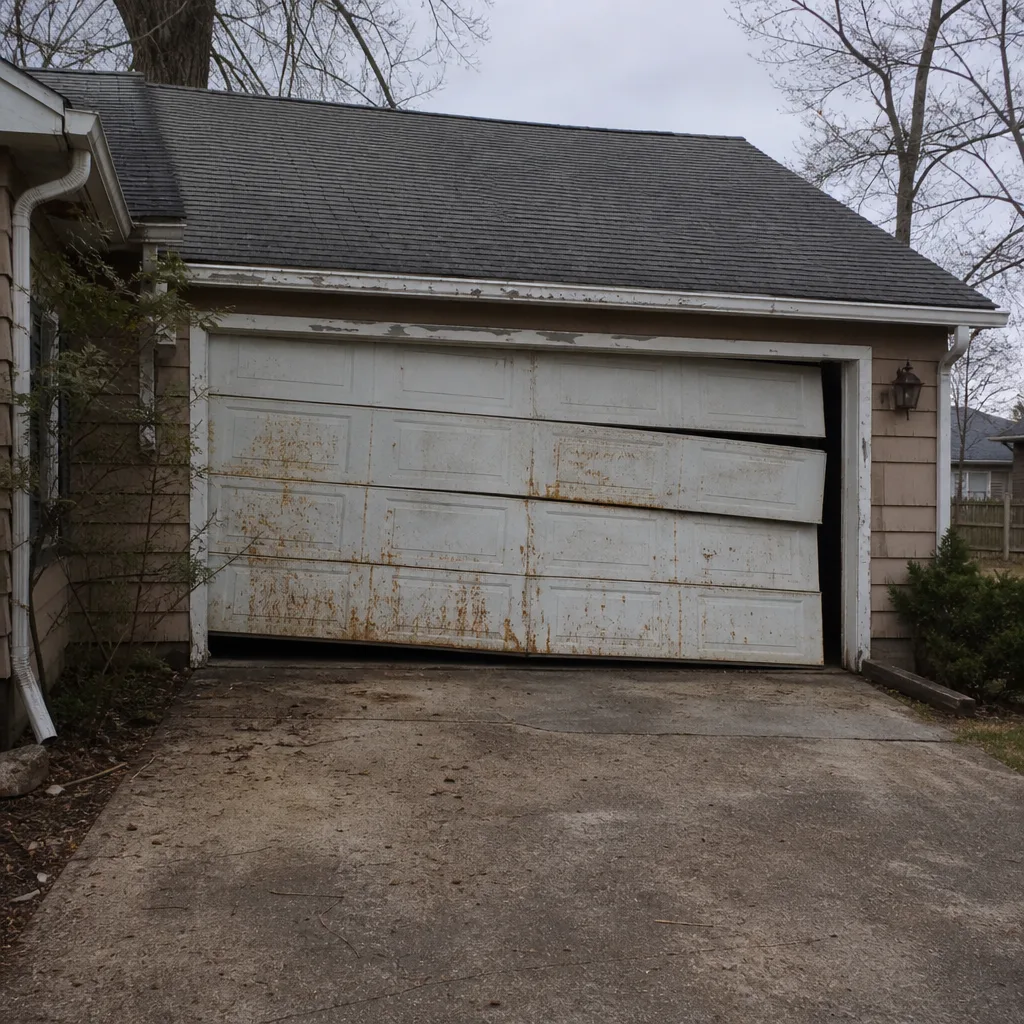 Before
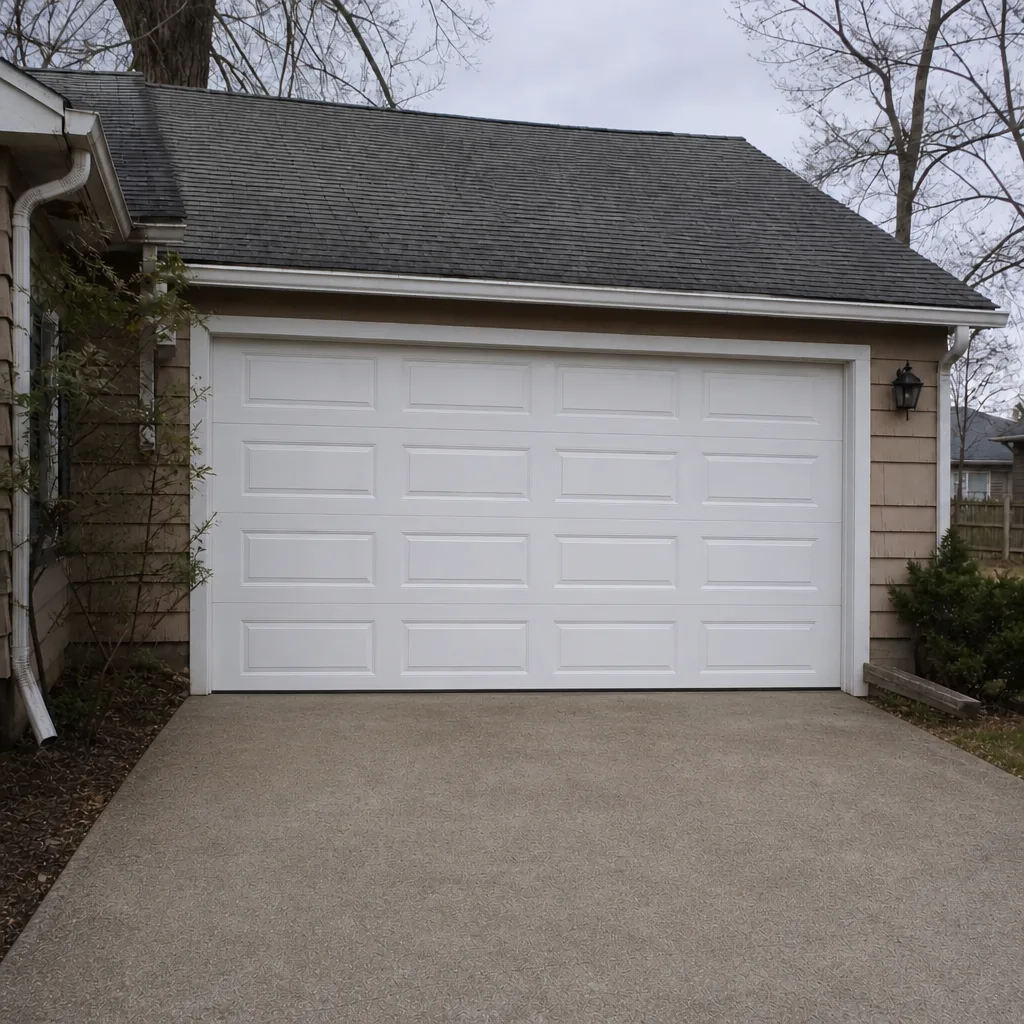 After
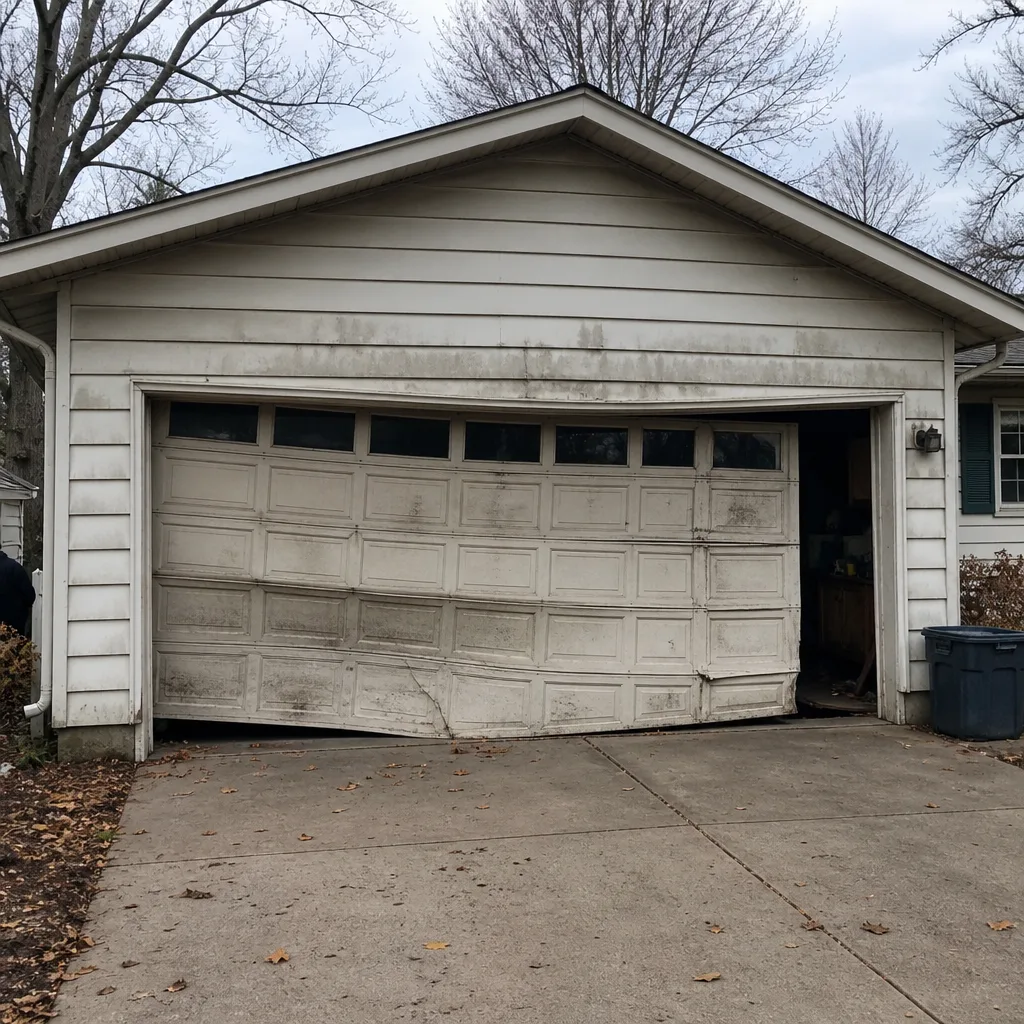 Before
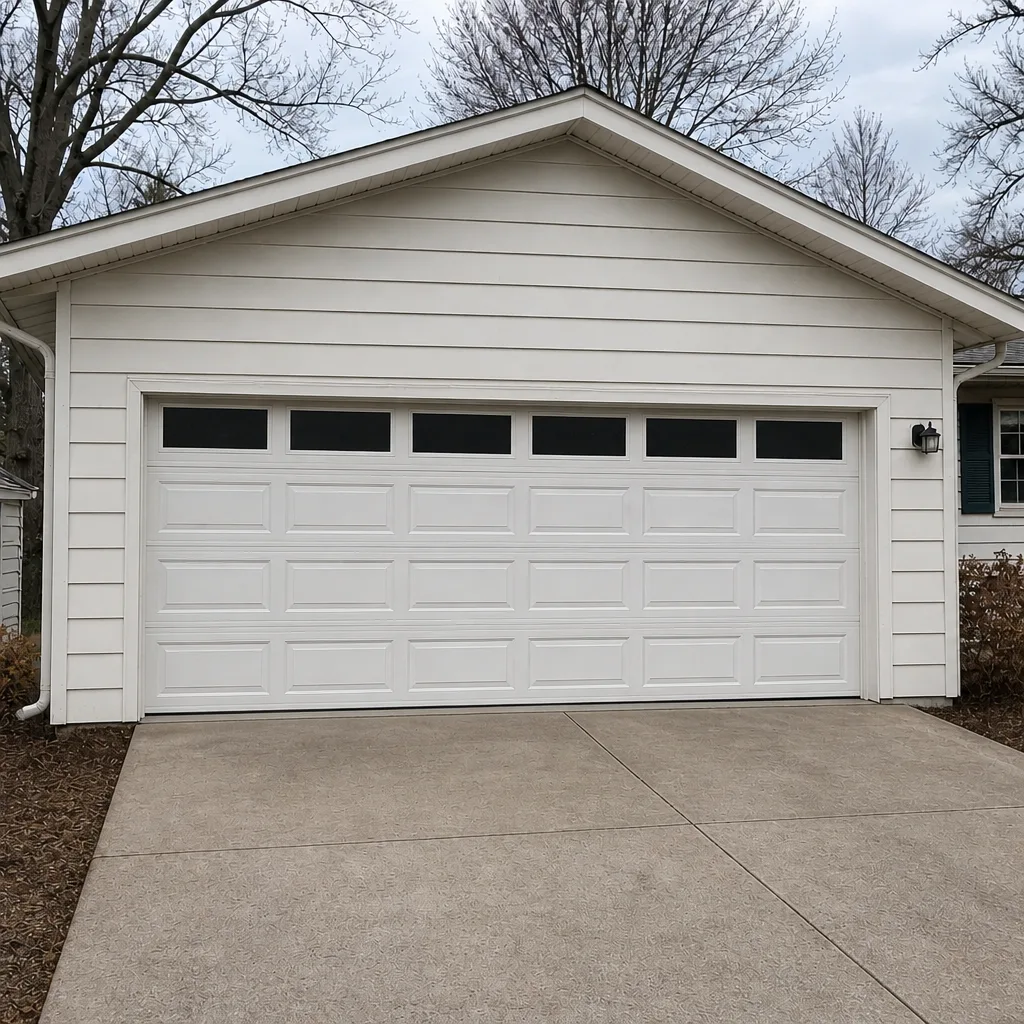 After
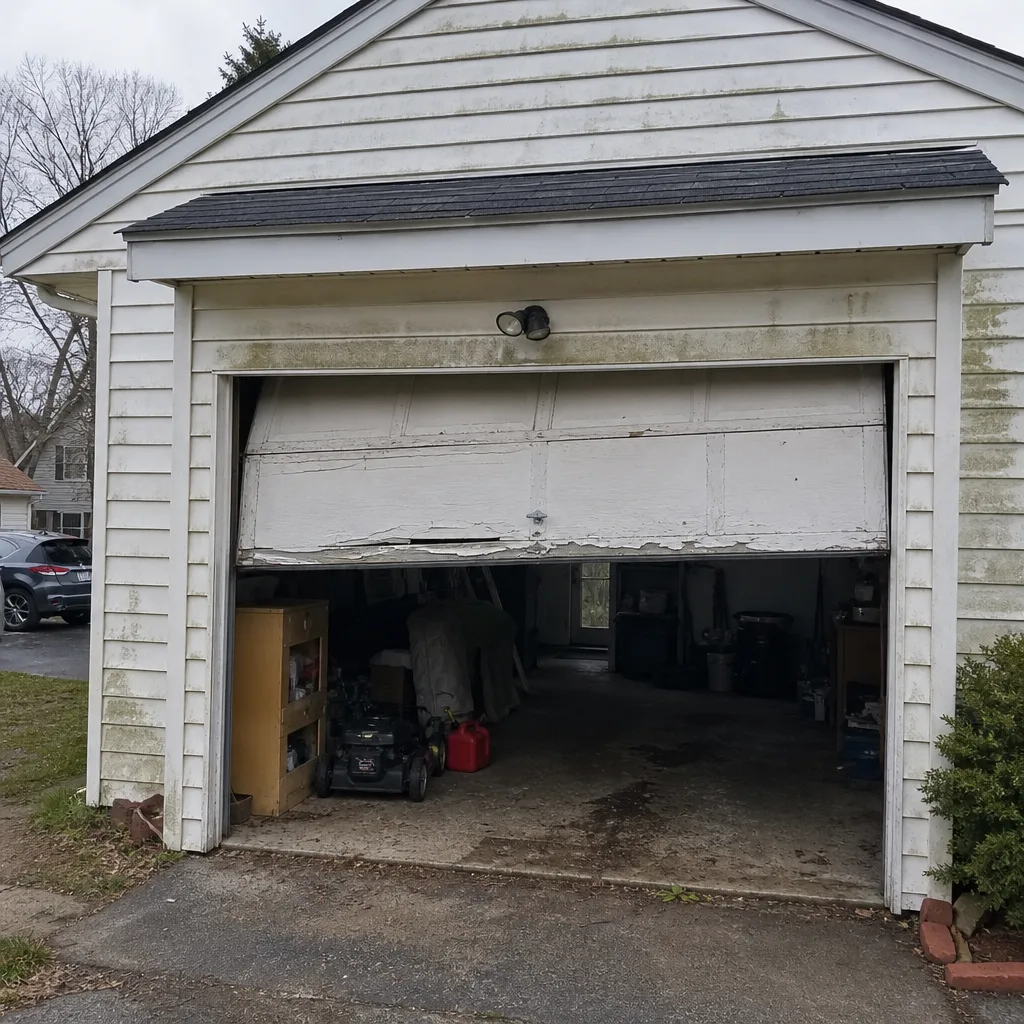 Before
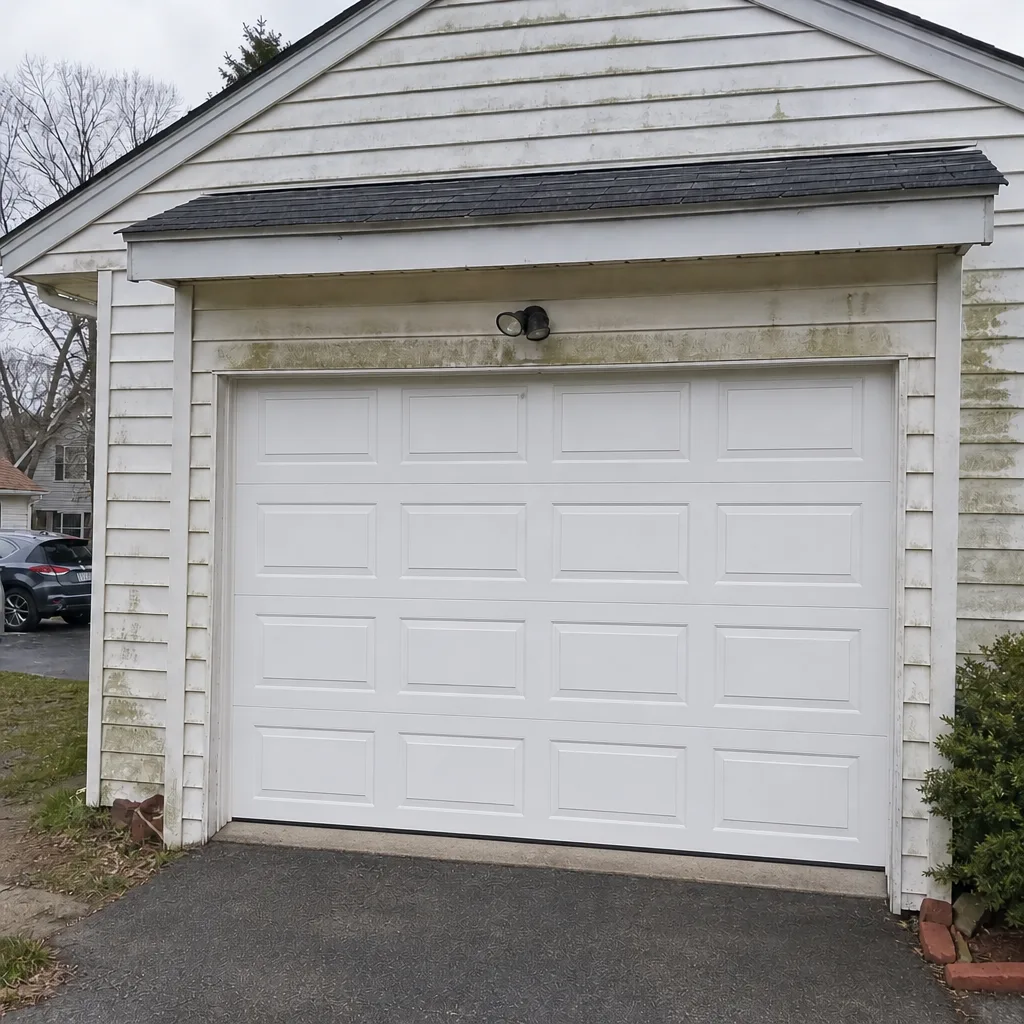 After
When to Call a Professional
Call a specialist when the door won’t open or close reliably, when a spring has broken, when the safety reverse fails its test, or when the door is visibly out of balance. Any metal part that’s frayed, sagging, or under tension is a professional job. Also call if your home is older and you don’t know the age or service history of the opener, or if you’re buying a home in Springfield and want the door inspected before closing. For repair needs, same-day emergency service is available because a broken door is a security and access issue that won’t wait. Springfield Garage Door Repair Co offers free estimates in Springfield. Call (866) 558-6301. We answer 24/7, with fast dispatch from 7am to 7pm, Sunday through Friday, and we’re closed Saturday. Every price is quoted and agreed before any work starts, and Our technicians have up to 14 years of experience on the brands already in your garage.
Frequently Asked Questions
Yes. Springfield’s freeze-thaw cycles put more temperature stress on springs and bottom seals than a milder climate does, and the humidity swings plus road salt near I-91 accelerate rust on steel panels and wear on seals. Checking the bottom seal each fall and having springs inspected regularly are more important here than in a warm, stable climate.
Test it: place a solid object like a roll of paper towels on the floor in the door’s path and close the door with the opener. If it stops and reverses when it touches the object, auto-reverse works. If it keeps going, the opener is not safe and should be serviced. This is the test that matters most on older Springfield homes.
Repair makes sense when the door’s panels and structure are sound and the problem is springs, rollers, cables, seals, or the opener. Replacement makes more sense when the door is rusted through, badly damaged, or has an opener with no parts available. A specialist can give you a written estimate either way, and the price is agreed before any work starts.
The local professionals we connect you with are licensed and insured as their state requires. Our technicians have up to 14 years of experience and focus entirely on garage doors, including springs, openers, panels, and tracks, rather than splitting time across other trades. Call (866) 558-6301 for a free estimate.
For repair and emergency calls, same-day service is often possible. We answer 24/7, with fast dispatch from 7am to 7pm, Sunday through Friday, and we’re closed Saturday. A call outside those dispatch hours is booked into the next opening. When the work is done, the price is quoted and agreed before any work starts, so you won’t get a surprise invoice.
The written estimate sets the final price. It’s free, and the price is quoted and agreed before any work starts. If the job turns out to be simpler than expected, the estimate reflects that. Call (866) 558-6301 for an exact quote; estimates are free.
The Bottom Line
Springfield’s climate and housing stock give the local driveway its own rules. Freeze-thaw cycles wear springs and bottom seals faster than mild climates do, the humidity and road salt around I-91 test steel and wood-composite finishes, and a large share of homes carry openers from before 1993 that may have no working auto-reverse. Start with the safety test, get the springs and balance checked, and look at the whole system as a unit rather than guessing at parts. If something’s off, a garage door specialist can sort it out. That’s the difference between a door that works today and one that keeps working through the next Springfield winter.
Springfield Garage Door Repair Co connects Springfield homeowners with independent local professionals who focus entirely on garage doors: repair, spring replacement, opener service, and full installation across the brands already in your garage. Call (866) 558-6301 for a free estimate. We answer 24/7, fast dispatch from 7am to 7pm, Sunday through Friday. For more on what we do, see Springfield Garage Door Repair Co.
Written by the team at Springfield Garage Door Repair Co.